

Which Origin Markets Commonly Use the Iran–Pakistan Corridor in 2026?
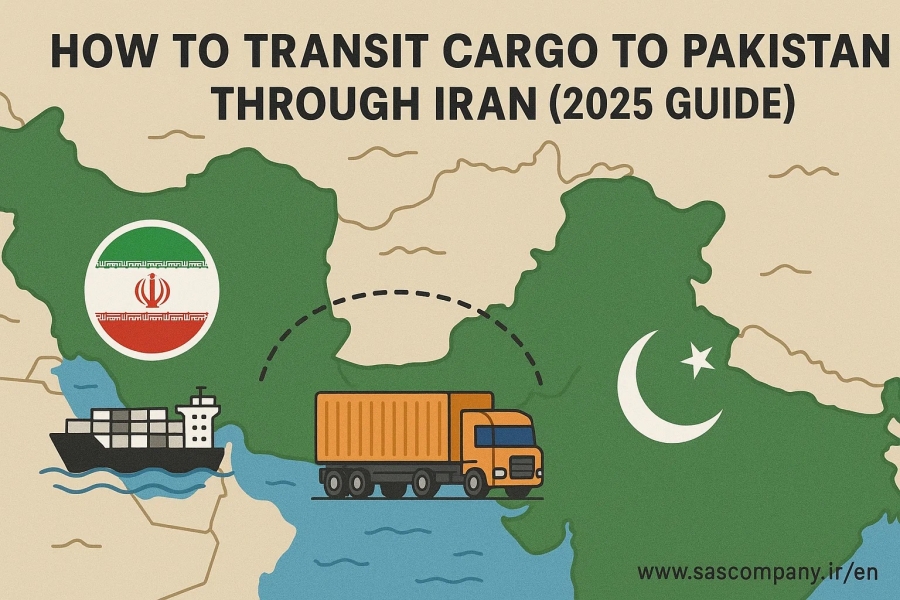
Iran’s strategic geographic location provides an efficient corridor for transiting goods to Pakistan. This land route is particularly important for time-sensitive cargo and shipments that need to avoid longer maritime routes.
ECO member countries that use Iran’s transit routes to Pakistan:
- Afghanistan (despite sharing a direct border with Pakistan, Iran can offer a more reliable route during occasional border disruptions)
- Azerbaijan
- Kazakhstan
- Kyrgyzstan
- Tajikistan
- Turkey
- Turkmenistan
- Uzbekistan
- Turkey
Other non-ECO countries that commonly utilize Iran’s transit routes to Pakistan:
- Gulf countries: UAE, Oman, Saudi Arabia, Qatar, Kuwait
- Iraq
- European countries with transit cargo: Germany, France, Italy
- Other nations connecting through international initiatives such as the International North-South Transport Corridor (INSTC) or China’s Belt and Road Initiative (BRI)
Main Iran–Pakistan Transit Routes (Road & Rail Options)
The Iran–Pakistan border offers established land transit options for FTL/LTL cargo, with the key Mirjaveh (Iran)–Taftan (Pakistan) crossing in the southeast serving as the main gateway. This corridor supports road transport primarily, with Iran’s highway network connecting southern ports like Bandar Abbas to Pakistani hubs such as Quetta and Karachi. The route provides a practical land option for regional trade, especially for shipments seeking to avoid longer maritime paths. TIR carnets are recommended for smoother customs procedures. In addition to the primary inland crossing at Mirjaveh–Taftan, a secondary coastal option via Rimdan–Gabd may also be relevant for selected shipments.
Road Options
Road transport is the main mode for flexible, door-to-door cargo. The primary inland route starts from Bandar Abbas or central Iran, continues to Zahedan, then crosses the border at Mirjaveh into Taftan, connecting onward to Quetta via Pakistan’s N-40 highway and further to Karachi. Trucks handle standard loads and out-of-cauge (OOG) cargo under agreed protocols, and customs inspections may affect transit times. A secondary coastal option may also be available via Chabahar or southeast Iran through the Rimdan–Gabd crossing toward Gwadar and coastal Pakistan, although availability should always be confirmed before dispatch.
Rail Options
The existing Quetta–Zahedan railway connects Pakistan to Iran and can support a rail freight service for bulk cargo. Trains continue from Zahedan into Iran’s rail network toward major cities like Tehran. While some international initiatives, such as the Islamabad–Tehran–Istanbul (ITI) corridor, aim to link Pakistan, Iran, and Turkey by rail, full containerized services and consistent multimodal connections are still developing. Rail can be suitable for bulk, project, and less time-sensitive cargo, but service planning should be checked case by case. In 2026, the rail corridor is strategically important, yet still infrastructure-constrained and not always the most reliable option for routine time-critical shipments.
Additional Notes
Transit efficiency depends on cargo type, security, and current border conditions. While projects like the Chabahar–Zahedan railway or broader North-South Corridor integration are underway, their completion timelines affect operational reliability. Mirjaveh–Taftan remains the primary/default route for most overland shipments, while coastal alternatives should be assessed case by case based on current operating conditions. Partnering with certified forwarders and using TIR documentation helps ensure smoother transport.
Required Documents for Transit Cargo to Pakistan through Iran
Due to the complexity of customs procedures and the nature of transit, required documents vary depending on the mode of transport (road or rail) and the status of the cargo (export or transit via Iran to a third country such as Pakistan).
Here are the key documents necessary for road transit of goods to Pakistan through Iran:
Core Transport and Customs Documents (for carriers and cargo)
These documents are essential for completing customs formalities and international transport at the Iran–Pakistan border (Mirjaveh–Taftan):
|
No. |
Document |
Description and Purpose |
|
1 |
TIR Carnet |
The most important document for road transit. This international customs booklet simplifies border procedures, reducing repeated inspections and the need for additional duties or guarantees at each border. Both Iran and Pakistan are TIR Convention members, and its use is highly recommended. |
|
2 |
CMR Consignment Note |
Evidence of the road carriage contract and of receipt of the goods by the carrier. It is not a document of title and is separate from the TIR Carne |
|
3 |
Transit Declaration / Permit |
Issued by Iranian Customs, this document allows cargo to pass through Iran under customs supervision to its final destination in Pakistan. |
|
4 |
Electronic Transit or Export Declaration |
Registered in Iran’s EPL system, this record specifies cargo details including type, weight, value, origin, and destination. It complements the TIR Carnet for full customs compliance. |
Commercial and Cargo Documents
These documents verify the nature, value, and origin of the goods for customs authorities in both countries:
- Commercial Invoice: Details seller, buyer, cargo type, quantity, and value for duty and tax calculation.
- Packing List: Provides a detailed list of contents, net and gross weight, number of packages, and dimensions.
- Certificate of Origin: Issued by the Chamber of Commerce of the country of origin (e.g., Iran or a third country) to confirm the nationality of the goods.
- Cargo Insurance Policy: Covers potential risks during transit.
Specialized Permits and Certificates (if applicable)
Required only for certain cargo types:
- Health and quarantine permits: Required for food, agricultural products, live animals, seeds, and animal-derived goods, issued by relevant veterinary or health authorities. Perishable items under these categories typically require cold chain logistics, including temperature-controlled transport and storage to maintain quality and safety during transit.
- Technical and standards certificates: For industrial equipment, electrical goods, or chemicals subject to Iranian and Pakistani standards.
- Special permits: For controlled goods such as hazardous goods, pharmaceuticals, or military/security items.
Driver and Vehicle Documents (for road transport)
These documents must accompany the driver and truck for transit cargo to Pakistan through Iran:
- Passport and visa: Valid passport and Pakistani visa (and Iranian visa if the driver is foreign).
- International Driving Permit (IDP): Valid license for cross-border driving.
- Vehicle registration and approval certificates: International vehicle registration and Certificate of Approval confirming compliance with TIR standards.
- Transit plate: Valid international transit plate for trucks traveling through Iran and Pakistan.
2026 digital note: In addition to core paper documents such as TIR, CMR, invoice, packing list, and permits, shippers should expect more advance-data and electronic validation requirements. Iran is connected to the eTIR international system, Pakistan has finalized its national interconnection, and both countries have worked on customs data exchange at Taftan–Mirjaveh. However, operators should not assume that every shipment will move on a fully paperless basis. The best way to ensure complete and correct documentation in 2026 is to consult a reputable international freight forwarder or official customs broker in Iran or Pakistan.
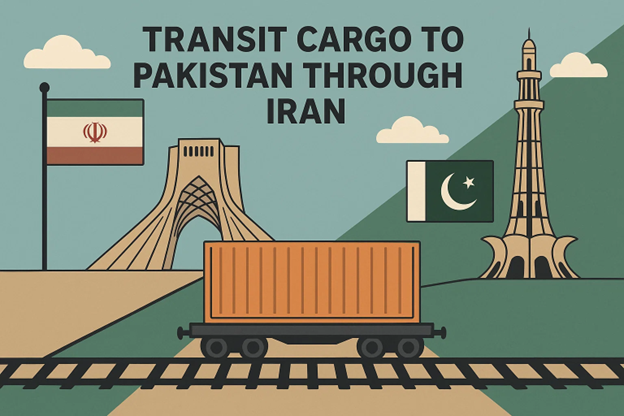
Step-by-Step Road Transit of Goods from Iran to Pakistan
The following step-by-step outline describes the standard road transit process for international shipments moving from Iran to Pakistan under the TIR Carnet system, which is the simplest and most common method for such transit. In 2026, operators should account not only for the TIR process but also for risk-based inspections, terminal controls, border timing, and bilateral data checks.
Part 1: Entry into Iran and Transit Initiation
1. Cargo Arrival and Unloading (if applicable)
Goods, typically containerized but sometimes transported as bulk or standard commercial shipments, arrive at the first Iranian customs entry point, usually Shahid Rajaee Port (Bandar Abbas) or other border/air customs. If arriving by sea, cargo is unloaded from the vessel and moved to designated customs areas or approved storage facilities.
- Transit Declaration and Permit
The international freight forwarder submits the core documents—including waybill, invoice, packing list, TIR Carnet, and Certificate of Origin—to the Iranian customs authority. The Electronic Transit Declaration is registered in Iran’s EPL system, supporting the customs clearance service process and specifying the final transit route, such as Bandar Abbas → Mirjaveh. For cargo under TIR, additional customs guarantees are generally not required, as the TIR Carnet itself acts as a financial and procedural guarantee. The transit permit is issued once documentation is verified.
- Cargo Inspection, Loading, and Sealing
Trucks or containers undergo physical checks or X-ray scanning to ensure consistency with the transit declaration. After inspection, containers are sealed using standard TIR customs seals to guarantee that cargo remains untampered during transit. Expected arrival times are provisional; gate capacity, terminal handling, and current border operating conditions can affect timing.
Part 2: Domestic Transit within Iran
- Road Transport to Exit Border
In a road freight service, the truck departs the origin customs and follows the designated route—typically Highway 84 toward Zahedan. Cargo movement is monitored under customs supervision, and for some shipments, GPS tracking may be used, although it is not universally applied to all TIR shipments. Drivers carry the transit permit and TIR Carnet, including the customs-stamped first page. - Arrival at Mirjaveh Exit Customs
At Mirjaveh, the truck undergoes final checks. Customs verifies all documentation (transit permit and TIR Carnet) and inspects seals.Border inspections here are subject to risk-based procedures and terminal capacity constraints. Upon approval, Iranian customs closes the domestic transit permit (Exit) and stamps the relevant page in the TIR Carnet, preparing the shipment for official border crossing into Pakistan.
Part 3: Border Crossing and Entry into Pakistan
- Crossing the Land Border
The truck proceeds through the neutral zone to the Pakistani entry gate at Taftan. - Entry at Taftan Customs (Pakistan)
Pakistani customs officials review driver, vehicle, and TIR documents. They confirm TIR procedures by stamping the TIR Carnet to record entry into Pakistan. Inspections may follow risk-based procedures, and additional terminal controls can influence processing times. For some shipments, additional customs seals are applied to secure transit within Pakistan. - Delivery to Final Destination in Pakistan
The truck continues domestic transport from Taftan to main destinations such as Quetta, Karachi, or Gwadar. At the final customs point, the consignee completes import clearance procedures, pays applicable duties, and the customs seals are removed, allowing delivery of goods.
For high-value or sensitive cargo, a cargo insurance service should be confirmed before dispatch to ensure coverage across the Iran–Pakistan transit route.
Key Notes:
- While TIR simplifies border procedures, some cargo types (bulk, hazardous, or special commodities) may have additional requirements.
- GPS monitoring is used selectively; it is not mandatory for all trucks.
- Seals in Pakistan may not be applied to every shipment, only when required for security or long internal transit under customs supervision.
The Critical Role of Iranian Freight Forwarders in Transit Success
Successfully navigating the Iran–Pakistan transit route requires a deep understanding of evolving customs regulations, complex documentation management (especially the TIR Carnet and Declarations), and precise coordination at the Mirjaveh–Taftan border crossing. The role of an Iranian Freight Forwarder or intermediary logistics company is to act as your primary liaison. These firms resolve potential logistical vulnerabilities by providing comprehensive services, including electronic document preparation (EPL), truck monitoring along the domestic route, and final clearance management. This level of expertise is essential to ensure your cargo crosses this strategic corridor without delays or penalties.If you are looking for a reliable transit service through Iran for Pakistan, we recommend contacting SASCO for specialized services and up-to-date consultation.