

What Is General Cargo and Its Types?
General cargo refers to goods transported in packaged or unitized forms, such as bags, boxes, crates, pallets, drums, or barrels. Unlike bulk cargo (loose materials like grain or ore loaded directly into holds) or fully containerized shipments, general cargo requires individual handling and is counted in distinct units. This category suits diverse, non-specialized items that demand flexibility in loading, documentation, and routing, making it ideal for international cargo transit via Iran.
Recent official data indicates that Iran handled nearly 22 million tonnes of foreign transit cargo in the 2024–2025 period, reflecting significant growth in the country’s role as an overland trade corridor. This figure includes a broad range of transit shipments, with general cargo moving via multimodal options such as road, rail, and sea playing a substantial part in these flows.
General cargo encompasses a diverse range of goods that can be transported without specialized handling. Common examples include clothing, furniture, packaged edibles, beverages, small electronics, machinery, construction materials like tiles and cement, agricultural products such as grains, and various personal items.
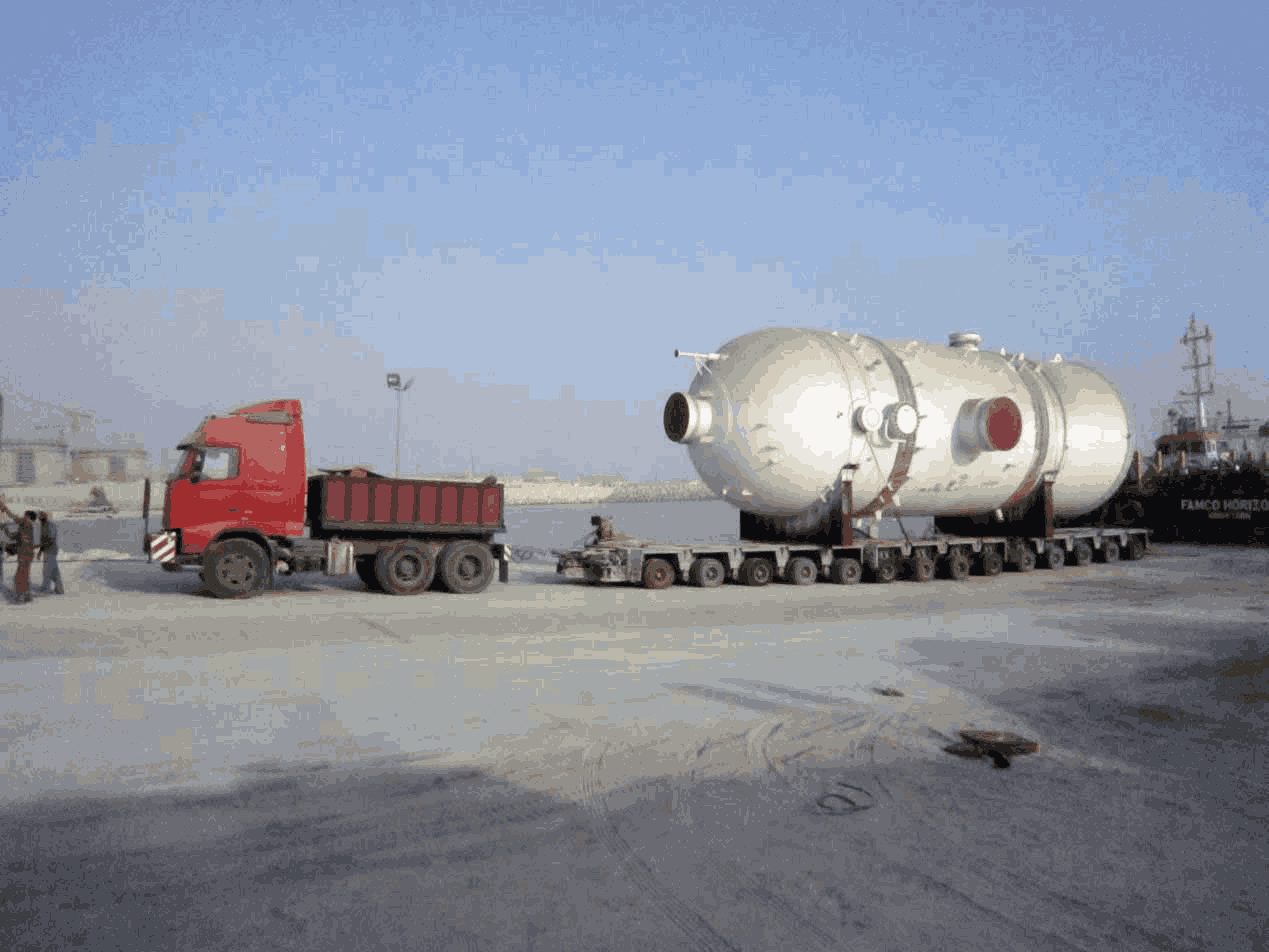
The photo below shows a sample of general cargo transited from Iran by SASCO.
Advantages of International Cargo Transit via Iran
Iran’s strategic location along key corridors, including the International North-South Transport Corridor (INSTC) and East-West routes, provides practical advantages for logistics planners considering international cargo transit via Iran.
Key Advantages include:
- Cost Savings: Multimodal transport service through Iran, combining rail, road, and sea transport, can reduce shipping expenses by 20–30% compared to traditional maritime routes via the Suez Canal. (artarail.com)
- Shorter Transit Times: Overland and combined routes can cut delivery times by up to 40%, e.g., from 40–60 days by all-sea routes to roughly 20–30 days via Iran’s corridors. (grokipedia.com)
- Geopolitical and Risk Diversification: Transit through Iran avoids maritime chokepoints such as the Suez Canal or the Malacca Strait, reducing exposure to piracy, congestion, or regional conflicts.
- Infrastructure Growth: Expanding ports (Bandar Abbas, Chabahar), rail lines, and digital customs systems (like TIR e-Carnet) enhance corridor reliability and ease of general cargo movements.
- Flexibility for General Cargo: Iran’s multimodal network accommodates diverse goods — machinery, steel, textiles, vehicles, and other general cargo — ensuring efficient handling and continuity to Central Asia, the Caucasus, and Europe.
For logistics planners, a transit through Iran service offers a viable operational alternative when speed, cost-efficiency, and reliability are priorities, especially as infrastructure investment continues to improve through 2026.
Challenges of International Transit of General Cargo Through Iran
Despite significant growth in cargo transit through Iran the route faces operational, regulatory, and geopolitical hurdles. These challenges particularly affect general cargo (break-bulk, neo-bulk, and containerized shipments) that require smooth customs, insurance, and multimodal coordination. Key Challenges include:
- International Sanctions: U.S. and EU sanctions limit access to modern equipment, spare parts, financing, and insurance. They deter international carriers and increase costs/risks for international cargo transit via Iran, especially for non-regional players.
- Infrastructure Limitations:Incomplete rail links (e.g., Rasht-Astara segment in INSTC), differing rail gauges at borders (requiring cargo transfers), aging roads/ports, and seasonal capacity constraints cause delays and higher handling costs.
- Customs and Bureaucratic Delays: Complex procedures, varying regulations across borders, and administrative hurdles slow clearance. Digital improvements are ongoing, but inconsistencies remain.
- Geopolitical and Security Risks: Regional tensions (e.g., Strait of Hormuz vulnerabilities, conflicts affecting maritime access) and competition from alternative corridors (e.g., Middle Corridor via Azerbaijan-Turkey, IMEC) divert potential volumes.
While investments in ports (Bandar Abbas, Chabahar), rail expansion, and agreements with neighbors (e.g., fee exemptions) mitigate these issues, logistics planners must weigh them carefully. For general cargo, partnering with experienced local forwarders helps navigate constraints and capitalize on transit via Iran where conditions align.
Major Ports and Transit Routes for General Cargo via Iran
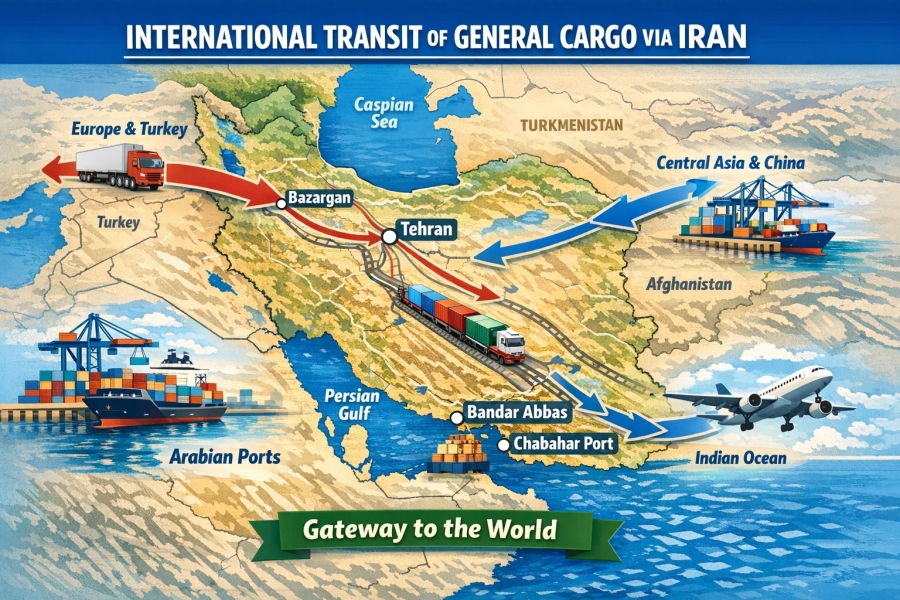
General cargo benefits from multimodal infrastructure, combining sea, rail, and road transport. Official data indicate key ports are as below:
- Bandar Abbas (Shahid Rajaee Port): Iran’s largest commercial southern port and the busiest container terminal in the country, handling around 75–83 million tonnes of cargo annually and responsible for roughly 85–90% of Iran’s container throughput. Its extensive rail and road connections make it a primary gateway for general cargo and transit movements (en.portnews.ru)
- Chabahar Port: Deep-water oceanic port on the Gulf of Oman, bypassing the Strait of Hormuz. Current capacity is around 8 million tonnes, suitable for oversized cargo and heavy lifts; long-term expansion planned.
- Bandar Imam Khomeini: Handles general and bulk cargo in the Persian Gulf, with strong inland connectivity.
- Caspian Ports (Bandar Anzali, Amirabad): Northern ports Facilitate northern routes via ferries to Russia and Kazakhstan, enabling multimodal transport to Europe and Central Asia.
Primary Transit Routes includes:
- INSTC Western Branch: Bandar Abbas/Chabahar → north via a rail freight service or road → Azerbaijan → Russia/Europe. Completion of Rasht–Astara rail will further improve corridor efficiency.
- INSTC Eastern Branch: Bandar Abbas/Chabahar → eastern Iran → Turkmenistan/Kazakhstan → Russia/Central Asia.
- Trans-Caspian Route: Southern ports → Caspian ports → ferry → onward to Russia.
- East-West Links: Connections via Sarakh's border or through Iraq/Afghanistan support regional trade flows.
These ports and corridors offer flexible options for general cargo, and ongoing infrastructure investments continue to enhance reliability for cargo transit through Iran.
Step-by-Step Process for Transit Operations
The process for international cargo transit via Iran of general cargo is streamlined compared to imports, as goods remain under customs bond and are exempt from duties. Digital systems like the Electronic Packing List (EPL) and TIR e-Carnet (for road) have accelerated procedures in 2025-2026, with transit volumes exceeding 20 million tons annually. Partnering with experienced forwarders minimizes delays.
Key Steps:
- Pre-Arrival Planning and Order Registration: Shippers/forwarders prepare documents and register the transit declaration electronically via Iran's EPL system or TIR platform. Specify entry/exit points (e.g., Bandar Abbas to Sarakhs).
- Cargo Arrival and Entry Customs Declaration: Goods arrive at entry port/border (e.g., Bandar Abbas, Chabahar). Submit transit declaration (Form 110 or T1), post bond/guarantee if required, and undergo initial inspection.
- Inspection and Verification: Risk-based checks (green/yellow/red channels). Physical inspection for compliance; seals applied for bonded transit.
- Payment of Fees: Cover transit fees, handling, escort (if needed), and insurance. No duties for pure transit.
- Inland Transportation and Tracking: Cargo moves via multimodal (road/rail/sea) with convoy/escort for sensitive routes.
- Exit Customs Clearance: At exit border (e.g., to Turkmenistan, Azerbaijan), verify seals/documents, cancel bond, and release for onward destination.
This process typically takes 10-20 days, faster with digital tools. For general cargo transit through Iran, local expertise ensures smooth operations amid growing INSTC volumes.
For more detailed information on Iran’s customs and transit procedures, read the article “Iran Customs Regulations: The Definitive Guide to Laws, Procedures, and Compliance.”
Essential Documentation and Customs Requirements
Accurate documentation is critical for efficient international cargo transit via Iran, avoiding delays at borders/ports. Core Documents Required:
- Bill of Lading (B/L) or Transport Document — Proof of shipment (sea/road/rail/air waybill).
- Commercial Invoice — Details value, description, and parties.
- Packing List — Itemized contents, weights, dimensions.
- Certificate of Origin (COO) — Confirms manufacturing country.
- Transit Declaration — T1, TIR Carnet (road), or Form 110; specifies transit nature.
- Customs Bond/Guarantee — Ensures goods exit Iran (refunded on proof).
- Insurance Certificate —Cargo insurance service covers risks during transit.
Additional/Customs Requirements:
For a road freight service: TIR e-Carnet is used for sealed vehicles.
- Health/Phytosanitary/Fumigation certificates for certain goods (e.g., agricultural).
- No import license needed for pure transit, but screening for sanctions/restrictions.
- Electronic pre-submission via EPL/IRICA portals.
Forwarders handle compilation and verification. Incomplete documents trigger inspections/fees. For general cargo transit via Iran, these ensure compliance and leverage incentives like fee exemptions for neighbors.
Case Study: Transit of Luxury Prefabricated Products via Iran to Kazakhstan
One of SASCO’s recent projects illustrates how international transit of general cargo via Iran can be managed efficiently. The shipment consisted of high-value prefabricated bathroom components and accessories, professionally packed and secured in SOC containers.The operation began at Jebel Ali Port and proceeded to Imam Khomeini Port in southern Iran.
Cargo first arrived at Imam Khomeini Port, where bonded transit procedures were applied under digital EPL and TIR e-Carnet systems, minimizing customs delays. From southern Iran, the shipment proceeded to Anzali Port on the Caspian Sea, enabling onward transport to Aktau Port in Kazakhstan. Final delivery included customs clearance and inland movement to the Tengiz industrial zone.
The operation was completed in just 40 days, reflecting SASCO’s ability to optimize international cargo transit via Iran through careful planning, accurate documentation, and local logistics expertise. Each container, valued over $35,000, highlights the importance of secure handling and multimodal coordination for general cargo.
For similar projects and practical examples of SASCO’s logistics solutions, visit our Projects page.
Frequently Asked Questions (FAQ): International Transit of General Cargo via Iran
What types of general cargo transit through Iran?
Break-bulk (machinery, steel, vehicles), neo-bulk (timber, paper rolls), and containerized goods (textiles, electronics).
How long does transit take?
Typically 10–25 days: southern ports to Central Asia 12–18 days; full INSTC routes 20–25 days, up to 40% faster than Suez.
What are the costs?
Transit via Iran is generally 20–30% cheaper than Suez routes. Rail options can save 18–25%.
Do sanctions affect shipments?
Pure transit is usually duty-free. Insurance and financing may be affected, but regional carriers manage most volumes efficiently.
Is insurance and tracking available?
Yes—coverage is available via local and international policies. Cargo can be monitored in real time via GPS and digital platforms like IRICA EPL.
Do I need a local forwarder for International General Cargo Transit via Iran?
Strongly recommended to ensure smooth customs clearance and reduce delays.For tailored advice on international general cargo transit via Iran in 2026, contact experienced forwarders.