

Dubai to Kazakhstan Freight at a Glance
Shipping from Dubai to Kazakhstan through Iran combines a short Gulf sea leg with onward road, rail or Caspian transport. The table below summarizes the main structure of a typical Jebel Ali to Kazakhstan freight movement. Actual routing, equipment, cost and transit time vary by destination, cargo characteristics and operating conditions.
|
Factor |
Typical Structure |
|
Origin |
Dubai / Jebel Ali |
|
Iran gateway |
Bandar Abbas / Shahid Rajaee Port |
|
Modes |
Sea + road / rail / Caspian multimodal |
|
Western gateway |
Aktau |
|
Main destinations |
Aktau, Atyrau, Tengiz, Almaty, Shymkent, Astana |
|
Equipment |
20ft, 40ft, 40HC, FTL, SOC where suitable |
|
Transit time |
Route- and destination-dependent |
|
Pricing |
Based on route, cargo, equipment and final delivery point |
How Does Freight Move from Dubai to Kazakhstan via Iran?
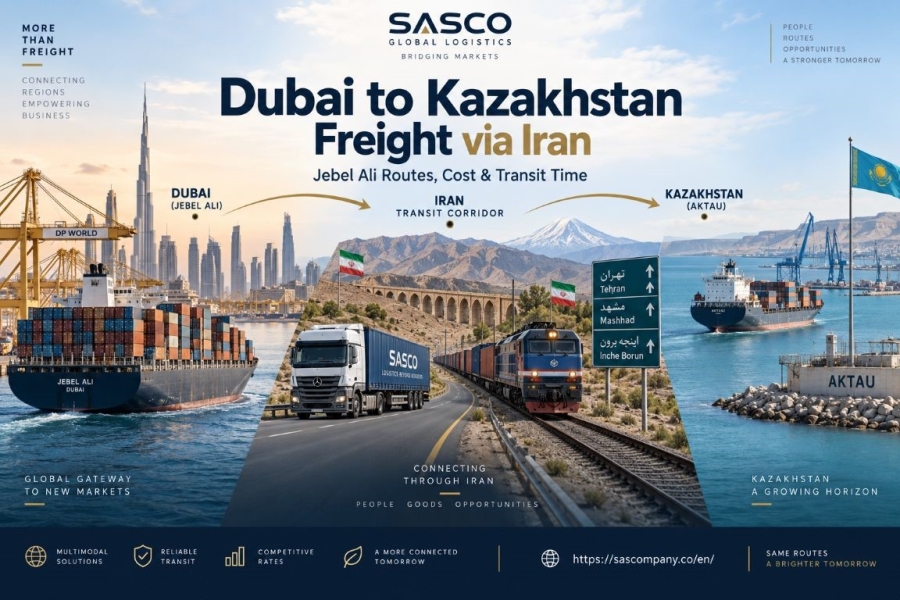
Dubai to Kazakhstan freight via Iran is typically arranged as a multimodal movement. Cargo first moves from Dubai to Jebel Ali, ships by short-sea service to Bandar Abbas, and then continues under transit across Iran toward either Central Asia or an Iranian Caspian port.
A typical route is: Dubai warehouse → Jebel Ali → Bandar Abbas → Iran transit → Central Asia or Caspian Sea → Kazakhstan → final destination.
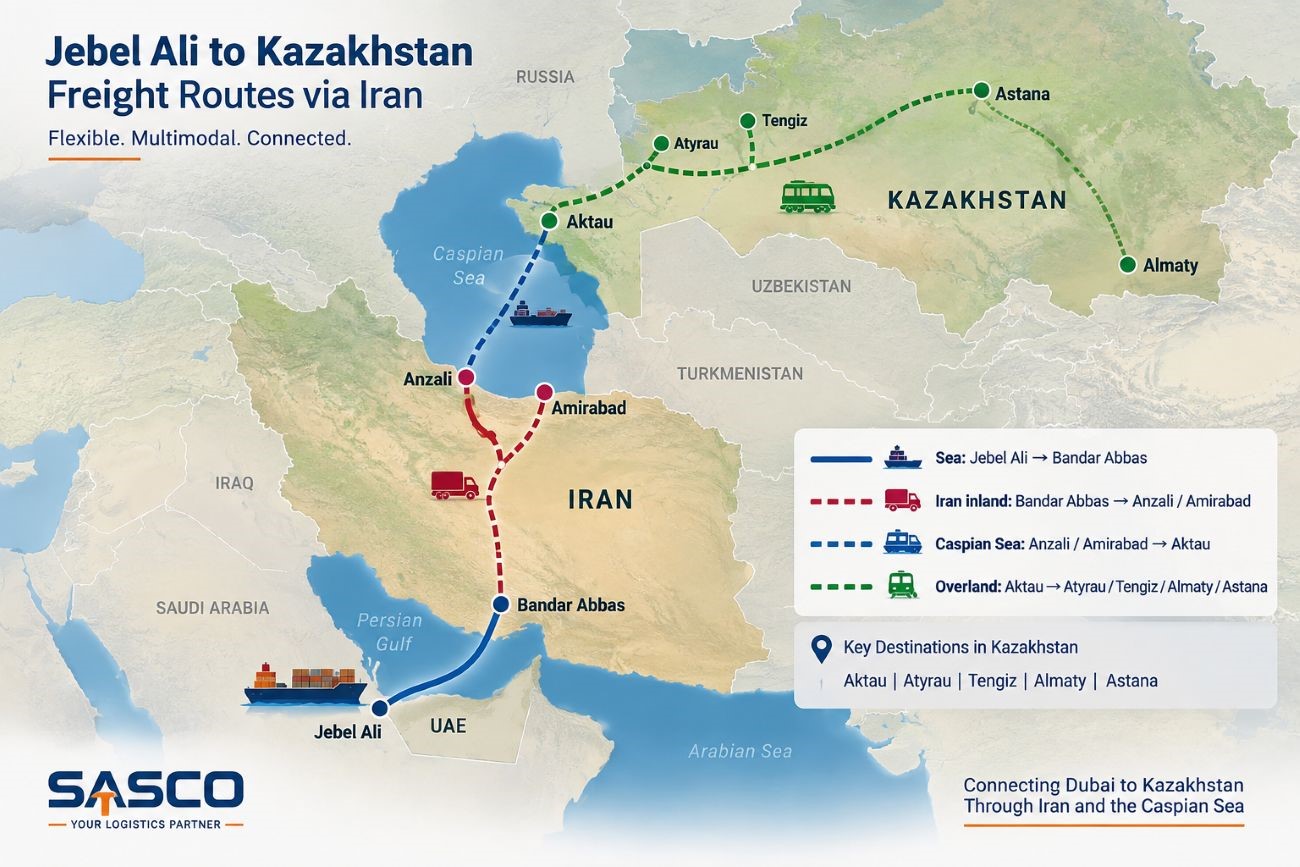
Because Kazakhstan is landlocked, there is no conventional direct ocean service from Jebel Ali to an inland Kazakh destination. Likewise, Bandar Abbas and Aktau are not connected by a direct sea voyage. Cargo using the Caspian route must first cross Iran by road or rail to Anzali or Amirabad before sailing to Aktau.
This makes Iran the connecting land bridge between the Persian Gulf and Central Asia.
Main Jebel Ali to Kazakhstan Routes via Iran
Two main route families are typically considered for Jebel Ali to Kazakhstan shipping via Iran, depending primarily on the final destination and cargo requirements.
Jebel Ali → Bandar Abbas → Central Asia → Kazakhstan
For Almaty, Shymkent, Astana and other inland destinations, cargo can move by short-sea service from Jebel Ali to Bandar Abbas and continue across Iran by road or rail toward Central Asia. Depending on the shipment and destination, the onward corridor may pass through Turkmenistan and, in some cases, Uzbekistan before entering Kazakhstan.
Road transport generally offers more routing flexibility, while rail may be suitable for containerized cargo, heavy shipments or regular volumes. Border selection and rail arrangements vary by shipment, so detailed Iranian gateways and procedures are covered separately in SASCO’s Bandar Abbas to Kazakhstan cargo transit guide.
Jebel Ali → Iran → Caspian Sea → Aktau
For Aktau, Atyrau, Tengiz and other western Kazakhstan destinations, a Caspian multimodal route may be more suitable. After entering Iran, the cargo moves north to Anzali or Amirabad and then crosses the Caspian Sea to Aktau, followed by onward delivery where required.
This option can reduce unnecessary inland movement for cargo bound for western Kazakhstan, but route selection still depends on cargo type, equipment, vessel availability, port conditions and final delivery requirements.
|
Route family |
Better suited to |
|
Iran + Central Asia overland |
Almaty, Shymkent, Astana |
|
Iran + Caspian/Aktau |
Aktau, Atyrau, Tengiz |
Dubai to Kazakhstan Freight Cost
Dubai to Kazakhstan freight cost cannot be represented by one fixed rate because an end-to-end quotation combines several transport and handling stages. The final price depends on the pickup point in Dubai, export or re-export status, container size, cargo weight, selected route, final destination and whether inland delivery in Kazakhstan is included.
|
Route |
20GP |
|
Jebel Ali → Almaty |
$___ |
|
Jebel Ali → Aktau |
$___ |
For Dubai to Kazakhstan shipping cost, the short-sea movement from Jebel Ali to Iran is only one part of the total quotation. Shippers should compare the complete service scope rather than only the initial ocean freight rate.
|
Cost component |
What it covers |
|
Dubai pickup |
Collection from supplier or warehouse |
|
UAE export/re-export |
Customs and documentation |
|
Jebel Ali handling |
Port and terminal charges |
|
Jebel Ali–Iran freight |
Short-sea transport |
|
Iranian port handling |
Discharge and transit handling |
|
Iran inland transport |
Road or rail movement |
|
Border/Caspian leg |
Depends on selected corridor |
|
Aktau handling |
Applicable to the Caspian route |
|
Kazakhstan delivery |
Final inland transport, if included |
|
Special cargo |
Permits or special equipment where required |
Dubai to Kazakhstan freight rates can therefore differ considerably between an FCL shipment to Almaty and a multimodal container movement to Aktau or Tengiz. For an accurate comparison, the quotation should clearly state the origin, destination, equipment, transport route and charges included. SASCO can provide a shipment-specific quotation once these details are confirmed.
Dubai to Kazakhstan Transit Time
Dubai to Kazakhstan transit time should be calculated from the agreed starting point to the final delivery destination, not only from the duration of the sea voyage. The Jebel Ali–Bandar Abbas sea leg typically takes around 1–3 days port-to-port, but the total journey also includes cargo preparation, transit procedures in Iran, onward road or rail transport, border operations and final delivery in Kazakhstan.
|
Route |
Transit Time |
|
Jebel Ali → Almaty |
– days |
|
Jebel Ali → Aktau |
– days |
|
Jebel Ali → Tengiz |
– days |
For shipments using the Caspian route, additional time may be required for inland movement across Iran, port handling at Anzali or Amirabad, vessel schedules and the sea crossing to Aktau.
|
Stage |
Main timing factor |
|
Dubai / Jebel Ali preparation |
Cargo readiness and export/re-export documents |
|
Jebel Ali → Bandar Abbas |
Approx. 1–3 days port-to-port |
|
Transit across Iran |
Road/rail route and equipment availability |
|
Caspian leg, if used |
Port handling, vessel schedule and weather |
|
Kazakhstan delivery |
Final destination and inland distance |
Transit times to Aktau, Almaty, Astana, Atyrau or Tengiz should therefore be estimated separately according to the selected route and current operating conditions.
Export vs Re-export from Dubai to Kazakhstan
Cargo departing Dubai for Kazakhstan may be either a UAE export or re-export cargo that was previously imported into the UAE. For example, goods originating in China or India may first enter Dubai for storage, consolidation or trading and later be shipped onward to Kazakhstan.
This distinction should be confirmed before departure because the customs procedure and supporting documents may differ. A Dubai re-export to Kazakhstan may require the shipment to be linked to its previous import records and cleared under the appropriate re-export declaration, while locally exported goods follow the applicable export procedure.
For UAE re-export cargo, shippers should therefore confirm the customs status of the goods before booking transport from Jebel Ali. Correct classification at origin helps avoid documentation mismatches or delays before the cargo begins its onward journey through Iran.
Documents Required for Dubai to Kazakhstan Freight
Documentation varies according to cargo type, customs status and the selected route. The main documents typically fall into the following groups:
|
Stage |
Typical Documents |
|
Dubai / UAE |
Commercial Invoice, Packing List, Certificate of Origin where required, Export or Re-export Declaration |
|
Transport |
Bill of Lading, CMR where applicable, container documents |
|
Transit / import |
Iran transit and Kazakhstan import documents according to cargo and route |
|
Special cargo |
Dimensions, weights, drawings and permits where required |
Exporters should confirm document requirements before the cargo leaves Jebel Ali, particularly for re-exported, restricted or non-standard cargo.
Documentation for the Iranian transit leg is covered in more detail in SASCO’s Bandar Abbas to Kazakhstan cargo transit guide.
Container and Cargo Options
Container shipping from Dubai to Kazakhstan can use 20GP, 40GP or 40HC equipment depending on cargo volume, weight and route requirements. SOC containers may also be considered where container-return restrictions make them operationally suitable.
For non-containerized movements, FTL transport can be used where appropriate. Heavy machinery, oversized units and other OOG or project cargo require shipment-specific equipment and route planning.
More complex movements are covered separately in SASCO’s Heavy Equipment Transport in Iran and Project Cargo & OOG Transport in Iran services.
SASCO Case Study: Jebel Ali to Tengiz via Iran and Aktau
SASCO has practical experience handling Dubai to Tengiz freight through Iran and the Caspian Sea. In one completed project, high-value prefabricated bathroom products and accessories were shipped in SOC containers from Jebel Ali Port to Imam Khomeini Port in southern Iran.
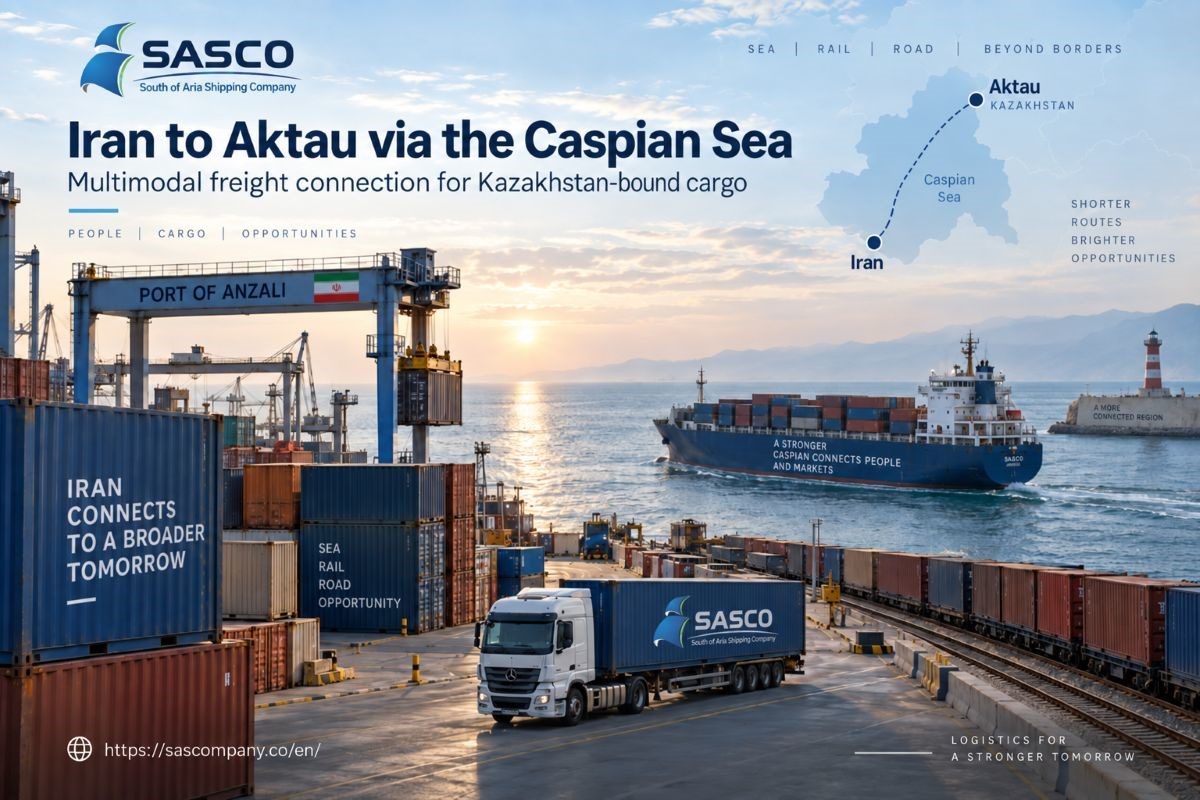
After arrival, SASCO coordinated the overland transit of the containers across Iran to Anzali Port on the Caspian Sea. The cargo was then shipped from Anzali to Aktau Port in Kazakhstan and, following customs clearance, transported onward to its final destination in the Tengiz region.
The complete Jebel Ali → Imam Khomeini Port → Anzali → Aktau → Tengiz operation was completed within 40 days. The value of the cargo exceeded USD 35,000 per container, requiring careful coordination across the different sea, road and port stages.
Although this shipment entered Iran through Imam Khomeini Port rather than Bandar Abbas, it demonstrates SASCO’s direct experience with the broader Jebel Ali–Iran–Caspian–Kazakhstan multimodal corridor. This experience is particularly relevant to shipments bound for Aktau, Atyrau and Tengiz in western Kazakhstan.
The completed shipment and project images can be viewed in SASCO’s Projects section.
What Can Delay Dubai–Kazakhstan Freight via Iran?
Several operational factors can affect the planned schedule for UAE to Kazakhstan shipping via Iran. Possible delays include Jebel Ali booking or cut-off issues, incomplete or mismatched documentation, Iranian transit processing, truck or rail-wagon availability, border congestion and special cargo permit requirements.
For shipments using the Caspian route, vessel availability, weather conditions and handling at Anzali, Amirabad or Aktau may also affect transit time. These factors should be checked when the final route and delivery schedule are planned.
2026 Update: Kazakhstan–Iran Logistics Links
Kazakhstan and Iran signed a BOT agreement on June 28, 2026 for the development of a Kazakh transport and logistics terminal at Shahid Rajaee Port in Bandar Abbas. The planned facility is intended to strengthen transit links between Kazakhstan, Iran and markets connected through the Persian Gulf. The project further highlights the strategic importance of Iran for Kazakhstan-bound cargo.
Why Choose SASCO for Dubai–Kazakhstan Freight via Iran?
SASCO coordinates multimodal freight from Dubai to Kazakhstan through Iran, combining port, road, rail and Caspian transport according to the cargo and final destination. Its scope includes Iranian transit coordination, route planning, container and SOC movements, and project or OOG cargo where specialized handling is required.
SASCO also has direct project experience on the Jebel Ali–Iran–Aktau–Tengiz corridor, including coordination of a completed SOC container shipment through the Caspian Sea. This operational experience supports route planning for both inland and western Kazakhstan destinations.
For a route-specific rate and transport plan, request a Dubai–Kazakhstan freight quote from SASCO.
Frequently Asked Questions About Dubai to Kazakhstan Freight
How much does freight from Dubai to Kazakhstan cost?
The cost depends on container size, cargo weight, export or re-export requirements, the selected Iran transit route and the final destination in Kazakhstan. Dubai to Kazakhstan shipping rates should therefore be compared on the same service scope. Indicative rates for key routes are shown in the cost table above.
How long does shipping from Dubai to Kazakhstan take?
Total transit time varies by route and destination. The Jebel Ali–Bandar Abbas sea leg typically takes around 1–3 days port-to-port, while transit across Iran, border procedures, Caspian schedules and final delivery add to the overall journey. Destination-specific estimates are shown above.
Can cargo move from Jebel Ali to Kazakhstan through Iran?
Yes. Cargo can move by short-sea service from Jebel Ali to southern Iran and continue by road, rail or a combination of modes toward Kazakhstan. Depending on the destination, the onward movement can use Central Asian overland corridors or an Iranian Caspian port and Aktau.
What is the best route for Dubai to Aktau freight?
Dubai to Aktau freight can use a multimodal route through Iran: Jebel Ali → southern Iran → inland transport to Anzali or Amirabad → Caspian Sea → Aktau. The final routing depends on cargo type, equipment availability, vessel schedules and current operating conditions.
Can goods imported into Dubai be re-exported to Kazakhstan?
Yes, subject to the applicable UAE customs procedure and documentation. Goods originally imported from countries such as China or India can be re-exported from Dubai to Kazakhstan, but their customs status and supporting import/re-export records should be confirmed before departure from Jebel Ali.
Can SASCO arrange Dubai to Atyrau or Tengiz freight?
Yes. Dubai to Atyrau freight and Dubai to Tengiz freight can be planned through Iran and the Caspian connection to Aktau, followed by inland delivery in western Kazakhstan. SASCO has previously coordinated a Jebel Ali–Iran–Aktau–Tengiz multimodal shipment using SOC containers.