

What Is Air Cargo to Iran?
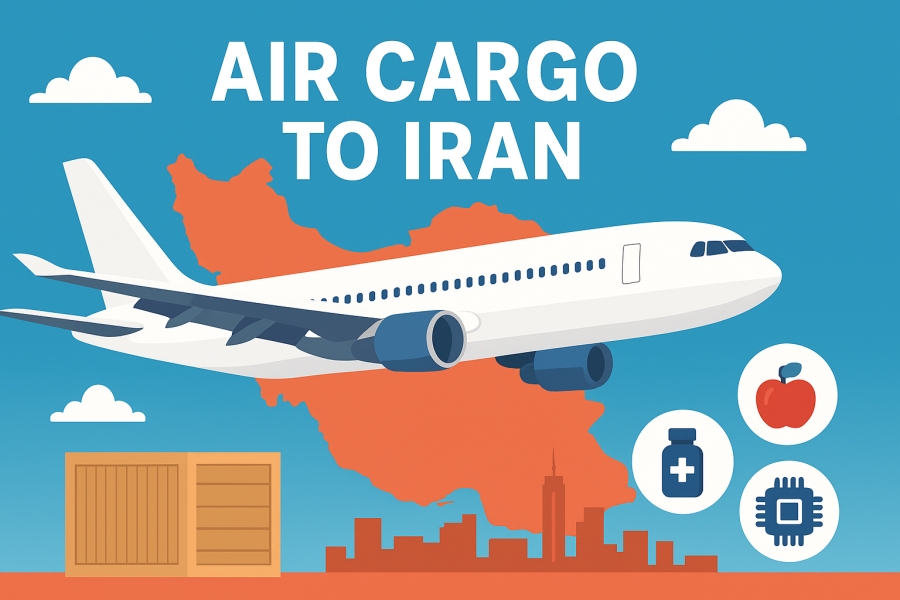
Air cargo to Iran refers to the movement of commercial goods by aircraft to an Iranian airport, usually under an Air Waybill and coordinated through airlines, cargo agents, freight forwarders, and customs-related parties. It may involve airport-to-airport shipping, door-to-door air freight, express air cargo, or time-critical delivery depending on the shipment’s urgency and final delivery needs.
In practice, air cargo is not a single action. It includes cargo evaluation, route planning, airline booking, document review, cargo handover, AWB issuance, flight movement, arrival handling, customs coordination, and final delivery where required. For Iran-bound shipments, the preparation stage is especially important because airline data, importer readiness, and customs documentation must be aligned before the cargo is accepted.
When Should You Use Air Cargo for Iran Shipments?
Air cargo is best used when the business risk of delay is higher than the extra transport cost. It is suitable for urgent spare parts, medical and pharmaceutical products, electronics, samples, prototypes, exhibition goods, high-value items, and commercial cargo needed for production, repair, or project deadlines.
It is also a strong option when the shipment is relatively small, valuable, time-sensitive, or difficult to replace. For example, a delayed machine component may stop production, while a delayed sample may affect a sales deadline. In these cases, air freight to Iran can be more cost-effective overall, even if the freight rate per kilogram is higher than sea or land transport.
For heavy, bulky, or low-urgency cargo, air freight may not be the best choice. Before booking, shippers should compare cargo value, dimensions, chargeable weight, delivery deadline, documentation status, and customs readiness. This helps determine whether air cargo to Iran is the right method—or whether sea, land, rail, or multimodal freight would be more practical.
Air Cargo to Iran vs. Air Freight Services in Iran
Air cargo to Iran and air freight services in Iran are closely related, but they do not serve the same purpose. This guide is designed to help shippers understand whether air cargo is the right method, what information must be prepared before booking, and which risks can delay an Iran-bound shipment.
Air freight services in Iran, on the other hand, refer to the actual logistics execution: route planning, airline booking, Air Waybill coordination, document review, customs support, airport handling, and delivery planning.
If you are still comparing transport options, this article can help you prepare. If your cargo is ready to move and you need a quotation, booking support, customs coordination, or door-to-door delivery, SASCO’s air freight services in Iran are the next step.
Main Air Cargo Entry Points in Iran
For most commercial air cargo to Iran, Tehran is the main destination to consider. Tehran Imam Khomeini International Airport, commonly identified by the IATA code IKA, is the primary international airport serving Iran’s capital and is located southwest of Tehran. Public airport data also identifies IKA as the airport used for international traffic into Tehran, while Mehrabad is mainly associated with domestic operations.
In practical air freight planning, this means many Iran-bound shipments are routed through Tehran before customs coordination and inland delivery are arranged.
Other airports may be relevant depending on airline routing, cargo type, consignee location, and final delivery plan, but shippers should first confirm whether Tehran IKA is the most practical arrival point for their shipment.
Required Documents for Air Cargo to Iran
Before booking air cargo to Iran, shippers should prepare a complete and consistent document file. Most commercial air freight shipments require:
- Commercial Invoice: value, cargo description, Incoterms, seller and buyer details
- Packing List: package count, weight, dimensions and packaging details
- Air Waybill: airline transport document matching the shipment data
- Certificate of Origin: proof of product origin
- Proforma Invoice: often needed for import order registration
- Import Permits: required for regulated goods
- Dangerous Goods Declaration / SDS: needed for hazardous cargo, batteries or chemicals
For the full checklist, see our guide to Required Documents for Shipping to Iran.
Mandatory Air Cargo Data for Iran Shipments
For air cargo to Iran, documents are not enough. Airlines may require electronic shipment data before cargo acceptance. Missing or incorrect data can cause correction requests, delayed uplift, shipment rejection, or customs clearance issues after arrival.
Before booking air freight to Iran, confirm these key data points:
- 8-digit HS Code:
The HS Code must match the cargo description, commercial invoice, and product classification. Avoid vague descriptions such as “parts,” “equipment,” or “general cargo.” - 10-digit postal code:
The consignee’s postal code should be complete, accurate, and consistent with the Iranian delivery address. - Consignee identification:
Depending on the consignee type, airlines may require a National ID, Legal ID / Legal Entity Code, FIDA number, or Passport Number. - Correct MAWB / FWB data:
The Master Air Waybill and electronic air waybill data should match the commercial documents. - Matching consignee details:
Consignee name, address, postal code, ID number, cargo description, HS Code, weight, and package count should be consistent across all documents and electronic records.
Many air cargo delays to Iran happen before departure. Preparing these data points early helps make air cargo shipping to Iran smoother, faster, and more predictable.
What Affects Air Cargo Cost to Iran?
Air cargo cost to Iran depends on more than the distance between the origin airport and Tehran. Each shipment must be priced based on its cargo profile, route, urgency, and handling requirements. This is why accurate air freight quotations require complete cargo details before booking.
The main factors that affect air cargo rates to Iran include:
- Actual weight: the real gross weight of the shipment.
- Volumetric weight: the space the cargo occupies on the aircraft.
- Chargeable weight: the higher figure between actual and volumetric weight.
- Cargo dimensions: oversized, non-stackable, or irregular cargo may increase cost.
- Origin airport: rates vary depending on the departure country, airport, and available airline capacity.
- Airline routing: direct, indirect, or transshipment routes can affect both cost and transit time.
- Urgency: express or time-critical air cargo usually costs more than standard air freight.
- Cargo type: general cargo is easier to price than high-value, fragile, temperature-sensitive, or regulated goods.
- Dangerous goods: batteries, chemicals, or hazardous materials may require special approval, packaging, and documentation.
- Handling requirements: special loading, storage, screening, or airport handling can add cost.
- Customs and document readiness: incomplete documents, HS codes, permits, or consignee data may create extra charges.
- Final delivery requirement: airport-to-airport, airport-to-door, and door-to-door air freight to Iran are priced differently.
For an accurate quotation, shippers should provide the cargo description, HS code, gross weight, dimensions, origin, destination, Incoterms, urgency, and final delivery requirements.
Typical Transit Time and Indicative Air Cargo Rates to Iran
Transit time for air cargo to Iran depends on the origin airport, airline schedule, routing, cargo acceptance process, transshipment, documentation readiness, customs process, and final delivery plan. Shippers should separate flight transit time from the full logistics timeline, because pickup, export handling, airline acceptance, arrival processing, customs clearance, and inland delivery can all affect the final delivery date.
The rates below are indicative public market examples and should not be used as a final quotation. Air cargo rates to Iran can change based on airline capacity, fuel surcharge, routing, cargo type, chargeable weight, and compliance review.
|
Example Route / Market |
Air Cargo Transit Time |
Indicative Public Market Rate |
Notes |
|
China to Tehran / IKA |
3–7 days |
about USD 5–8/kg |
Depends on origin airport, chargeable weight, and service level. |
|
Guangzhou to Tehran / IKA |
3–7 days |
about USD 6.5–9.5/kg |
Public examples vary by shipment size and rate validity. |
|
Europe to Iran |
4–7 days |
Quote required |
Rate depends heavily on airline routing and compliance review. |
|
India to Iran |
4–6 days |
Quote required |
Suitable for urgent commercial cargo and smaller shipments. |
|
USA to Iran |
5–8 days |
Quote required |
Subject to sanctions screening, export-control review, cargo eligibility, airline acceptance, and permitted routing.. |
Last reviewed: May 2026. For a valid SASCO quotation, shipment details must be checked before booking.
Reviewed by: SASCO Air Freight Operations Team
Last updated: May 2026
Service coverage: Commercial air cargo to Iran, IKA arrival coordination, customs readiness, and final delivery support.
Step-by-Step Air Cargo Booking Process to Iran
Booking air cargo to Iran is smoother when the shipment is checked before it reaches the airline. A practical air freight process usually includes these steps:
- Share cargo details: provide the cargo description, weight, dimensions, package count, origin, destination, Incoterms, and required delivery timeline.
- Confirm HS code and consignee data: check the 8-digit HS Code, consignee postal code, and required identification details before booking.
- Review documents: prepare the commercial invoice, packing list, certificate of origin, proforma invoice, and any cargo-specific documents.
- Check cargo restrictions: confirm whether the goods need import permits, airline approval, dangerous goods documents, or special handling.
- Choose the airline route: compare available routings based on cost, transit time, cargo type, and arrival handling in Iran.
- Book cargo space: reserve airline capacity after the cargo profile and documents are reviewed.
- Issue the Air Waybill: make sure AWB and electronic shipment data match the commercial documents.
- Monitor departure and arrival: track cargo movement, flight status, and arrival updates.
- Coordinate customs clearance: prepare for import review, duties, permits, and cargo release.
- Arrange final delivery if required: move the shipment from airport to consignee, warehouse, or project site.
For urgent or commercial shipments, SASCO can help review the cargo details and arrange the right air freight solution to Iran.
Common Mistakes That Delay Air Cargo to Iran
Many air cargo delays to Iran happen because the shipment is booked before the data, documents, or cargo eligibility are properly checked. Common mistakes include:
- missing or incorrect 8-digit HS Code
- wrong or incomplete 10-digit postal code
- missing consignee National ID, Legal ID, FIDA number, or Passport Number
- vague cargo descriptions such as “parts” or “equipment”
- mismatch between the commercial invoice and packing list
- checking import permits too late
- reviewing restricted or regulated goods after booking
- wrong chargeable weight estimate due to inaccurate dimensions
- incomplete AWB or electronic shipment data
- assuming customs clearance will be simple without document review
Checking these points before booking helps reduce correction requests, cargo acceptance delays, storage costs, and clearance problems after arrival in Iran.
How SASCO Helps with Air Cargo to Iran
As a freight forwarder, SASCO does more than check documents or request airline rates. We coordinate the full air cargo process to Iran, from cargo review and route planning to airline booking, Air Waybill coordination, customs readiness, airport handling, and final delivery where required.
Before booking, SASCO reviews the cargo description, HS code, dimensions, weight, consignee data, required documents, and delivery terms to identify possible delays before the shipment reaches the airline. Our team then helps coordinate suitable air freight options, prepare the shipment for airline acceptance, follow up on departure and arrival, and support customs-related coordination in Iran.
If your cargo is urgent, high-value, regulated, or deadline-driven, SASCO can provide a practical air freight solution based on the actual shipment profile.
Learn more about our air freight services in Iran.
FAQ
What documents are required for air cargo to Iran?
Most shipments require a commercial invoice, packing list, Air Waybill, certificate of origin, and proforma invoice. Regulated cargo may also need import permits, inspection documents, or a Dangerous Goods Declaration and SDS.
What data is required before booking air freight to Iran?
Shippers should confirm the 8-digit HS Code, 10-digit postal code, consignee identification details, cargo description, weight, dimensions, and correct MAWB / FWB data.
How is air cargo cost to Iran calculated?
Air cargo cost is usually based on chargeable weight, route, origin airport, cargo type, urgency, handling needs, and final delivery requirements.
How long does air cargo to Iran take?
Transit time depends on the origin, airline schedule, routing, cargo acceptance, documentation readiness, customs process, and delivery plan.
Can SASCO arrange door-to-door air cargo to Iran?
Yes. SASCO can support air cargo planning, airline coordination, customs readiness, and final delivery depending on the shipment requirements.