

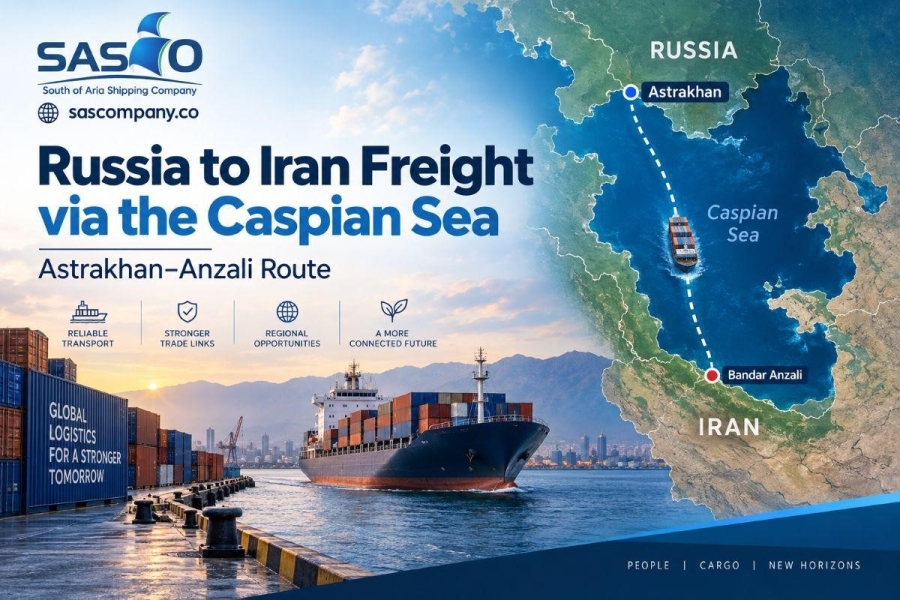
How the Astrakhan–Anzali Freight Route Works
Cargo can reach Astrakhan by road or rail before being loaded onto a vessel bound for northern Iranian ports. The transport plan should identify the actual loading terminal, discharge port and inland delivery point. A shipment through Bandar Anzali typically follows these stages:
1.Collection at the Russian supplier’s premises and inland movement to the loading terminal.
- 2. Export documentation, terminal handling and loading onto the nominated vessel.
- 3. Passage through the Volga–Caspian access route and across the Caspian Sea.
- 4. Discharge at Bandar Anzali and completion of the applicable import or transit procedures.
- 5. Inland delivery to the agreed warehouse, factory or project site in Iran.
The route is part of the wider North–South transport network and provides a maritime connection between Russia and northern Iran. The overall transport chain, however, depends on the selected origin, discharge port and final delivery point in Iran.
Anzali, Amirabad and Nowshahr are separate discharge options. Selection among northern ports in Iran should consider vessel acceptance, handling facilities and the final destination. Any onward rail movement also needs its actual terminal and connecting leg confirmed.
Cargo Types and Shipping Options
The shipping method should match the cargo’s physical requirements and shipment size.
|
Cargo profile |
Option to assess |
Main booking check |
|
Packaged goods and container-compatible machinery |
Container shipping |
Equipment, payload, availability and return terms |
|
Steel, timber and unpackaged equipment |
Breakbulk shipping |
Dimensions, lifting, securing and weather protection |
|
Grain and other bulk commodities |
Bulk vessel space or charter |
Parcel size, handling method and cargo requirements |
|
Heavy or oversized industrial units |
Project cargo shipment |
Vessel suitability, lifting capacity and inland access |
For container shipping from Russia to Iran, specify whether equipment is shipper-owned (SOC) or carrier-owned (COC). SOC acceptance needs confirmation; COC quotations should identify free time, return location and potential detention charges.
Vessel chartering in Iran may suit a substantial parcel or a project needing dedicated capacity. Small consignments, refrigerated cargo and dangerous goods require a specific service check before booking; consolidation or specialist equipment should not be assumed available on every departure.
Russia to Iran Freight Costs and What Is Included
Russia to Iran shipping costs vary depending on cargo type, equipment, loading point, destination and the required service scope. A sea freight rate from Astrakhan to a northern Iranian port is only one part of the total transport cost when inland transport, customs clearance and final delivery are required.
For container shipments, the following figures can be used as a general planning reference:
|
Equipment |
Approximate sea freight range (Astrakhan to northern Iranian ports) |
|
20ft dry container |
Around USD 800–1,000 |
|
40ft dry container |
Around USD 1,600–2,000 |
These figures represent indicative market levels and not a fixed quotation. For a confirmed Russia–Iran freight cost based on your cargo details, equipment requirements and delivery scope, request a quotation from SASCO.
|
Cost item |
What it may include |
|
Collection and transport within Russia |
Pickup location, road or rail transport and loading arrangements |
|
Origin terminal and export handling |
Terminal operations, documentation, storage and vessel loading |
|
Caspian sea freight |
Container size, cargo quantity, equipment type and shipping terms |
|
Iranian port charges |
Discharge, terminal handling, release and storage |
|
Customs and inland delivery |
Clearance services, duties and taxes, and final trucking |
|
Additional services |
Insurance, inspections, special lifting and waiting charges |
For bulk and breakbulk cargo, freight may be calculated per tonne or as a lump sum depending on the cargo and vessel arrangement. Container shipments should also confirm whether the equipment is SOC or COC and whether any detention or return charges apply.
Astrakhan to Anzali Transit Time
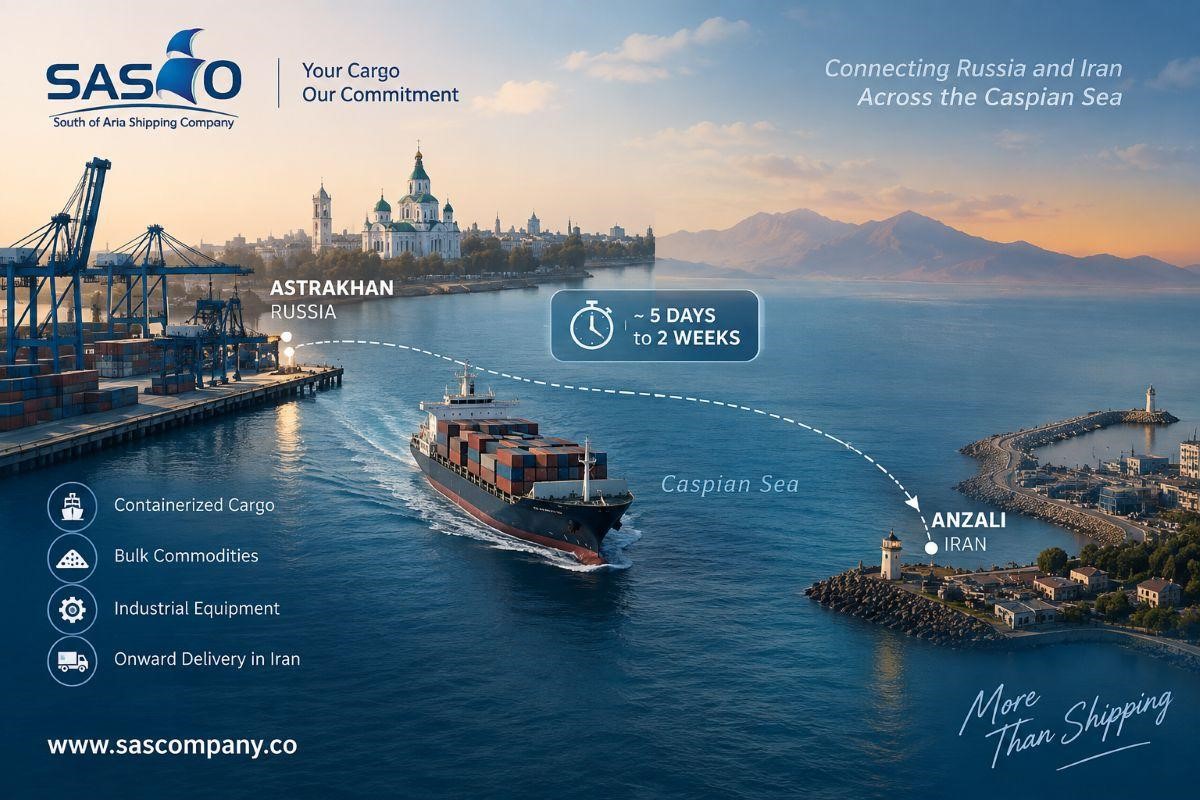
For planning purposes, the sea transit from Astrakhan to northern Iranian ports can generally be estimated at around 5 days to 2 weeks. Actual transit time depends on vessel schedules, congestion in the Volga–Caspian Canal, weather conditions, port availability and cargo handling requirements.
This range refers mainly to the maritime movement and should not be treated as a complete door-to-door transit time. A shipment from a supplier in Russia to a final destination in Iran may also require time for inland collection, terminal handling, vessel waiting, customs clearance and final delivery.
|
Stage |
What determines the timing |
|
Collection and origin readiness |
Pickup location, inland transport and complete documents |
|
Waiting and loading at Astrakhan |
Cargo cutoff, vessel nomination and terminal readiness |
|
Canal passage and sea movement |
Access conditions, weather and the vessel itinerary |
|
Discharge and customs release |
Berth availability, documents, inspections and release procedures |
|
Delivery within Iran |
Destination, vehicle availability and unloading arrangements |
For time-sensitive cargo, the most important factor is often the next available vessel departure, rather than the sailing time alone. Waiting several days for a suitable departure can significantly affect the total transit time.
For a shipment-specific transit estimate, SASCO can check the proposed route, cargo readiness date, vessel availability and final delivery point before booking.
Documents and Customs Clearance in Iran
Customs preparation should begin before the cargo leaves Russia. Missing or inconsistent documents can delay clearance after arrival in Iran, so the importer and customs broker should verify the required documents for shipping to Iran and applicable import approvals before dispatch.
The exact document set depends on the commodity and import procedure, but the following items are commonly relevant:
|
Document / Requirement |
What to Check |
|
Commercial invoice |
Seller and buyer details, cargo description, quantity, value, currency and Incoterm |
|
Packing list |
Package count, dimensions, net and gross weight, and cargo description |
|
Transport document |
Correct shipper, consignee, ports, cargo details and bill of lading information |
|
HS code and cargo classification |
Correct tariff classification and consistency across shipping and customs documents |
|
Import registration and approvals |
Confirm that the Iranian importer has the required registration and authorization for the intended import |
|
Certificate of origin and special permits |
Check origin requirements and any standards, health, agricultural, technical or dangerous-goods permits |
Because Russia is a member of the Eurasian Economic Union (EAEU), eligible Russia–Iran trade may also benefit from preferential tariff treatment under the EAEU–Iran Free Trade Agreement. Where preferential treatment is claimed, the applicable rules of origin and certificate-of-origin requirements should be confirmed before shipment.
Requirements vary by commodity. Agricultural products, foodstuffs, pharmaceuticals, regulated machinery, dangerous goods and other controlled products may require additional permits, inspections or certificates.
Import clearance for goods entering the Iranian market is different from customs transit through Iran to another country. The intended customs procedure should therefore be defined before shipment so that the documents and responsibilities match the actual movement.
SASCO can coordinate customs clearance in Iran together with onward delivery. For cargo-specific requirements, importers should confirm the final document and permit requirements before dispatch.
When to Choose the Caspian Route
The Caspian route is worth considering when the Russian origin has efficient access to Astrakhan and the cargo can be discharged through Anzali or another northern Iranian port. It is particularly relevant for containerized cargo, bulk commodities and industrial or project shipments requiring vessel capacity.
Route selection should be based on the complete door-to-door movement rather than the sea leg alone. Compare the Caspian option with available road or rail routes based on total transit time, handling requirements, vessel availability, terminal costs, customs procedures and final delivery in Iran.
For urgent or smaller shipments, sailing frequency and consolidation availability may be important. For heavy or oversized cargo, vessel capacity, lifting requirements and inland access from the discharge port to the final destination should also be checked.
SASCO can assess the Caspian option as part of its sea freight services.
SASCO Project from Russia to Iran
SASCO has used the Astrakhan–Anzali route for the transport of a complete automotive painting line from Russia to Iran. The equipment was loaded in Nizhny Novgorod and transported by rail to Astrakhan in SASCO-owned containers. After customs procedures in Astrakhan, the containers were loaded onto a fully chartered vessel and shipped across the Caspian Sea to Anzali.
Using the same containers throughout the rail and sea stages avoided cross-stuffing and reduced unnecessary cargo handling. The complete project took approximately two months, including the wider project operations rather than only the Caspian Sea transit.
View the SASCO Russia–Iran project.
Frequently Asked Questions
Is a direct Astrakhan to Anzali shipment possible?
The port pair forms a Caspian shipping route, but a direct sailing and departure date require confirmation for the nominated vessel. Verify whether the proposed itinerary includes other port calls or a transfer.
Can small shipments travel on this route?
They require confirmation of a suitable consolidation or part-cargo arrangement. Send package dimensions, weight and readiness date; do not assume that an LCL service is available for every departure.
Can I use my own container?
A shipper-owned container can be assessed for the movement, subject to carrier and terminal acceptance. Provide its size, type, condition and relevant certification details before booking.
Can SASCO arrange delivery beyond Anzali?
Yes. SASCO can coordinate onward delivery to the agreed Iranian destination, with handling and unloading responsibilities defined in the quotation. For the opposite trade direction, see shipping from Iran to Russia.
Request a Russia–Iran Freight Quote
Send SASCO the Russian collection address, Iranian delivery address, commodity and HS code if available, package count, dimensions, gross weight and cargo readiness date. Specify container requirements, any special handling needs, and the agreed Incoterm with its named place.
For machinery, include photographs and lifting information where available. State whether you need port-to-port transportation or coordination through to final delivery, including customs support. SASCO can then assess the route, equipment and vessel options and define the quotation scope. Request a Russia–Iran freight quote with your shipment details.