


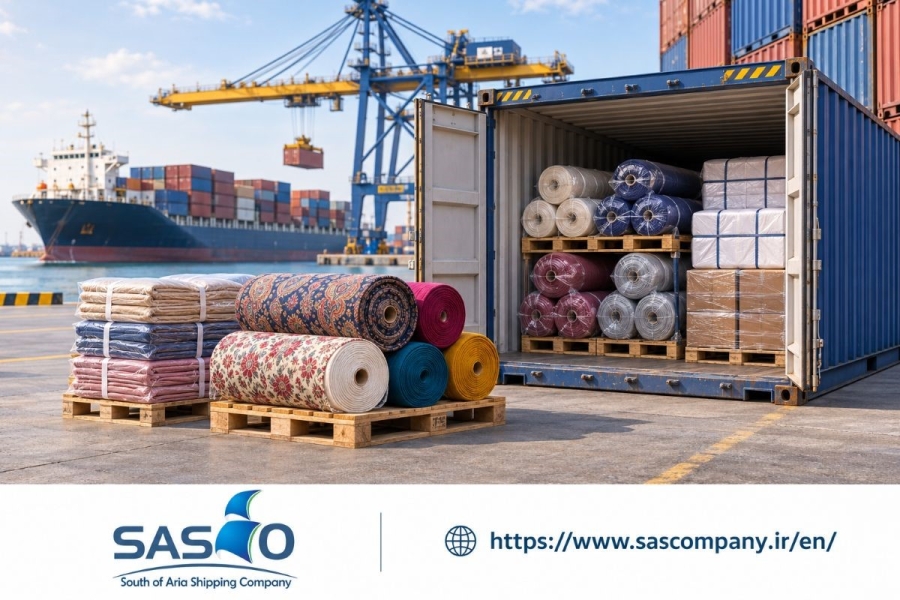
What Types of Textiles Can Be Shipped from India to Iran?
Fabrics and Yarn
Commercial textile cargo includes cotton fabrics in rolls, polyester and other synthetic fabrics, woven and knitted materials, and cotton or synthetic yarn packed on cones or in cartons. For cotton fabric shipping from India, roll dimensions, wrapping, and package weight affect handling and container planning. Yarn shipping from India to Iran requires secure packing to limit rubbing and movement. Accurate fiber composition, roll dimensions, total weight, and cubic volume (CBM) help determine suitable shipping arrangements.
Garments and Home Textiles
Ready-made garments, bed sheets, towels, curtains, upholstery fabrics, and other finished home textiles may require different packaging from unfinished fabric rolls. Strong cartons and protection help preserve garment shape and reduce crushing or moisture damage. Import eligibility varies by product and HS classification, so registration requirements, restrictions, and permits must be verified before booking freight.
FCL, LCL and Air Freight for Textile Cargo
FCL Shipping for Fabric Rolls and Yarn
FCL textile shipping reserves a container for one shipper, limiting contact with other cargo and reducing handling stages. It suits larger fabric-roll or yarn shipments needing stacking and securing. Select 20GP, 40GP, or 40HC according to cargo weight, volume, and loading plan. Sensitive textiles may justify FCL even without filling the container.
LCL Shipping for Smaller Textile Shipments
LCL fabric shipping suits fabric rolls, yarn cartons, or smaller orders. Charges reflect CBM or chargeable weight. Consolidation at origin and deconsolidation at destination introduce extra handling, increasing exposure to moisture or compression. Use protective packaging, and check container freight station (CFS) charges at both ends when comparing quotations.
When Is Air Freight Suitable for Textiles?
Air freight for textile samples, urgent orders, and compact high-value goods can shorten delivery. Airlines use chargeable weight, generally the greater of actual weight and volumetric weight; bulky packaging therefore increases costs. For wholesale fabric volumes, compare air rates with the value of faster arrival.
|
Method |
Suitable Cargo |
Main Advantage |
Key Consideration |
|
FCL |
Bulk fabric rolls |
Dedicated space |
Container cost |
|
LCL |
Small orders |
Volume flexibility |
Extra handling |
|
Air |
Urgent samples |
Fast transport |
Higher rates |
Main Shipping Routes from India to Iran
From Surat and Ahmedabad, textile exporters can assess Mundra or Nhava Sheva. Mumbai and Maharashtra cargo often uses Nhava Sheva (JNPT). Tiruppur and Coimbatore may route via Chennai or V.O. Chidambaranar (Tuticorin), subject to schedules. Ludhiana shipments need inland transport to a suitable port.
Mundra to Bandar Abbas shipping and Nhava Sheva to Bandar Abbas freight are possible arrangements, not confirmed direct services. Shahid Rajaee Port in Bandar Abbas is a principal Iranian gateway, followed by inland delivery to Tehran, Isfahan, or Tabriz. Check current carrier schedules, cargo acceptance, and transshipment before booking.
|
Textile Origin |
Possible Loading Port |
Iran Gateway |
|
Surat / Ahmedabad |
Mundra / Nhava Sheva |
Bandar Abbas |
|
Mumbai / Maharashtra |
Nhava Sheva |
Bandar Abbas |
|
Tiruppur / Coimbatore |
Chennai / Tuticorin |
Bandar Abbas |
How Much Does Textile Shipping from India to Iran Cost?
Freight Pricing for FCL, LCL and Air Cargo
The India to Iran textile shipping cost depends on cargo characteristics and transport mode. FCL rates are quoted per container, with 20GP, 40GP, or 40HC selected for loading. Basic 20GP sea-freight is around USD 900–1,500, excluding local charges and customs. LCL rates depend on CBM or chargeable weight, plus consolidation fees; air freight depends on chargeable weight and routing. Lightweight, bulky fabrics require space, while dense yarn loads require payload checks. Cargo value influences insurance and protective packaging.
Additional Charges Beyond Ocean Freight
Beyond international freight, quotations may include factory pickup, inland transport in India, export handling, documentation, destination terminal or CFS charges, customs duties, clearance fees, insurance, and delivery in Iran. Storage, demurrage, or detention may apply during delays. Incoterms and service scope determine included charges. A freight quote differs from total landed cost, which also includes goods and import expenses. For current rates, request an accurate textile shipping quote from SASCO.
Textile Cargo Transit Time from India to Iran
Textile cargo transit time depends on the loading port, vessel schedule, and possible transshipment. Published port-to-port estimates for western India to Bandar Abbas range roughly from 4 to 16 days, while door-to-door delivery takes longer. Factory pickup, export documentation, booking waits, destination handling, customs clearance, and inland delivery extend the schedule. LCL shipments also require consolidation and deconsolidation.
For updated sailing schedules and delivery estimates, contact SASCO with your cargo details and planned shipping date.
Textile Cargo Packaging and Moisture Protection
Preventing Moisture and Container Damage
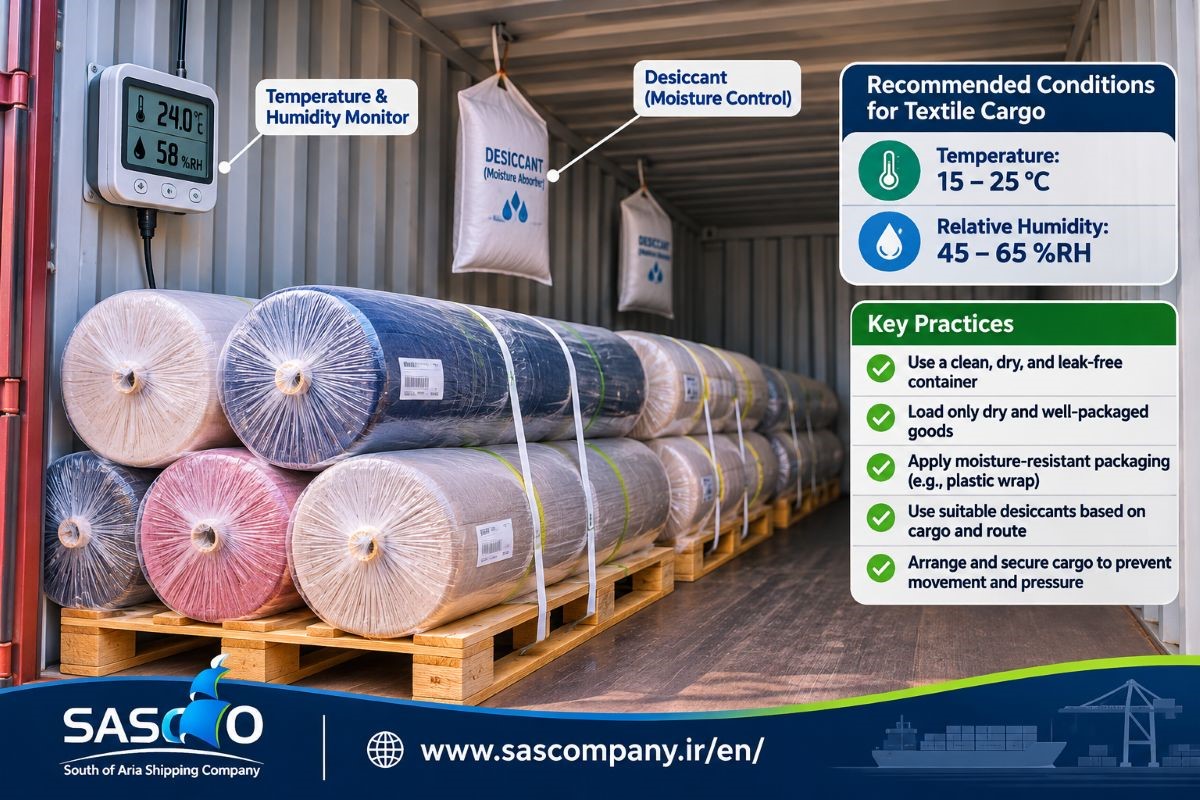
Moisture protection for textile cargo starts before loading at the export terminal. Cotton and other natural fibers can absorb humidity, causing musty odors, staining, mildew, and deterioration.
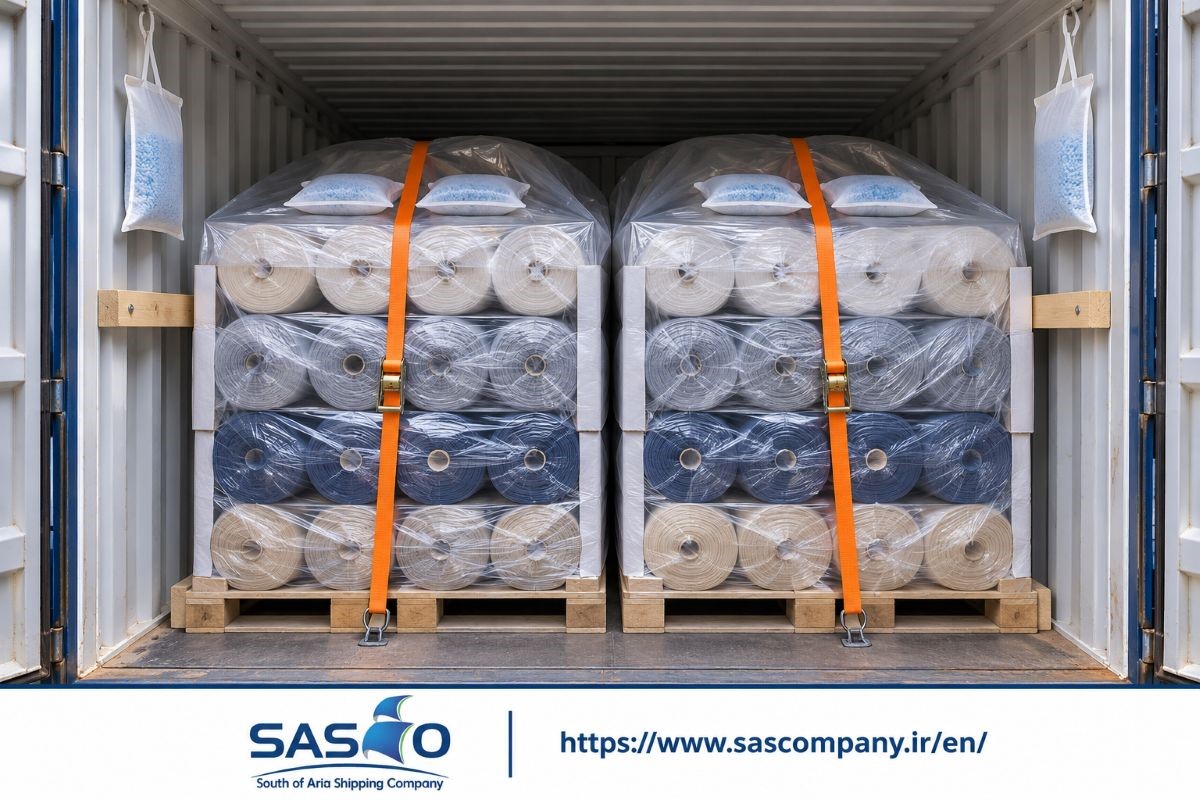
Inspect the container for cleanliness and dryness; check flooring, walls, door seals, and signs of leaks or condensation. Keep fabric rolls and cartons away from wet, oily, or contaminated surfaces. Load only dry goods and packaging, using moisture-resistant wrapping and appropriately sized desiccants when conditions justify them.
Arrange pallets, dunnage, and securing materials to prevent movement and excessive stacking pressure. These precautions reduce exposure but cannot guarantee mold-free delivery, particularly when temperatures fluctuate during sea transport. Photograph container condition before closing and sealing.
Packing Fabric Rolls, Yarn and Garments
Textile cargo packaging should match each product's handling risks. Wrap fabric rolls securely, label them by fabric type and roll number, and avoid crushing or tearing during loading. For delicate fabrics, protect edges and prevent contact with sharp container fittings. Pack yarn cones or bobbins in stable cartons or protective bags, with pallets and separators to limit rubbing between units. Finished garments need sturdy cartons or hanging arrangements where appropriate, protecting their shape against moisture, compression, and abrasion. Before dispatch, review cargo insurance coverage against declared value, transport stages, and risks of damage or loss.
Iran Textile Import Rules and HS Codes
HS Classification and Import Registration
An HS code for textile imports depends on fiber composition, whether a fabric is woven or knitted, its processing, and the finished product. Under the World Customs Organization's textile classification, Chapters 50–63 cover textiles and textile articles: 52 cotton; 54 man-made filaments; 55 man-made staple fibers; 61 knitted apparel; 62 non-knitted apparel; and 63 other made-up textile articles. These chapter examples do not determine the final Iranian tariff line for that product.
Before shipping, the importer should confirm the applicable national code, eligibility, order registration requirements, and any product-specific approvals, because errors can delay clearance.
Textile-Specific Compliance Checks
Iran textile import customs clearance requirements vary across fabric, yarn, and finished garments. Confirm whether each product is permitted, restricted, or subject to licensing before booking transport. Check whether a product identification code (Shenaseh Kala) is required for the relevant tariff line at order registration; Iranian 2025 circulars introduced such requirements for specified product groups, with exceptions. Match fiber composition, product description, quantities, and tariff codes across registration and shipping documents.
SASCO's customs clearance coordination can support document checks, but importers should independently verify current approvals before cargo leaves India.
Documents Required for Textile Shipping
Textile shipping documents should describe each shipment precisely and remain consistent across commercial and transport records.
The commercial invoice identifies the seller, buyer, product, quantity, value, and Incoterms.
The packing list specifies fabric rolls, yarn cartons, or pallets, including package count and net and gross weights.
A Bill of Lading covers sea shipments; an Air Waybill covers air cargo.
A Certificate of Origin may be required, alongside Iranian import registration and applicable permits.
Where relevant, record fiber composition, fabric width, roll length, package count, and weight to support classification and inspection. Cross-check these details before dispatch to prevent discrepancies. This matters in consolidated textile shipments.
How Textile Shipping from India to Iran Works
- Cargo and eligibility review: Confirm fabric or yarn type, fiber composition, HS code, shipment volume, and current Iranian import eligibility.
- Method and route selection: Compare FCL, LCL, or air freight using volume, sensitivity, origin, and requested delivery requirements.
- Packaging and pickup: Arrange suitable protective wrapping, labels, securing, and collection from the supplier or factory in India.
- International freight and documentation: For shipping textiles from India to Iran, coordinate booking, export paperwork, and dispatch.
- Customs and final delivery: Arrange destination handling, customs formalities, and onward transport to the agreed delivery address within the quoted service scope.
Why Choose SASCO for Textile Freight from India?
At SASCO, we coordinate sea freight, container selection, shipping documentation, port operations, and customs-related logistics for commercial cargo moving through Iran. Our completed projects include the 2023 sea-freight export of one container of comforter sets and fitted sheets—directly relevant experience with finished textile products. We also imported six containers of sock-knitting machines in 2022, demonstrating work with textile-industry equipment. These records do not establish a completed India-to-Iran textile shipment. For new shipments, our team can assess FCL/LCL options, handling needs, and appropriate delivery arrangements for each specific cargo and destination.
Frequently Asked Questions
How much does fabric shipping from India to Iran cost?
Fabric shipping from India to Iran is priced according to shipment volume, weight, CBM, loading and destination ports, transport mode, and the services included. Share packing details and delivery terms to obtain a current quotation instead of relying on rates.
Is FCL or LCL better for shipping fabric rolls?
LCL may cost less for small shipments because you pay for shared container capacity, but consolidation adds handling. FCL provides dedicated container space and can be preferable for larger or moisture-sensitive fabric loads, even when not completely full.
How can textile cargo be protected from moisture during sea freight?
Check that the container is clean, dry, and leak-free. Load only dry, properly wrapped rolls or cartons, use suitable desiccants when justified, and secure packages against movement or pressure. These measures reduce moisture exposure without eliminating risk entirely.
What customs requirements apply to textile imports from India to Iran?
Confirm the correct HS code, legal import eligibility, registration, and product-specific permits before shipment. Some tariff lines may require a product identification code (Shenaseh Kala). Applicable requirements depend on the exact textile product and current applicable Iranian import regulations.
Request a Textile Shipping Quote from SASCO
Planning commercial textile freight from India to Iran? Send SASCO your product description and HS code, roll or package count, gross weight, CBM or dimensions, Indian origin, Iranian destination, Incoterm, and cargo ready date to request a textile freight quote.